Hive vs OpenClaw: Two Different Approaches to Building AI Agents

26 years building and operating hosting infrastructure. Founded Remsys, a 60-person team that provided 24/7 server management to hosting providers and data centers worldwide. Built and ran dedicated server and VPS hosting companies. Agento applies that operational experience to AI agent hosting.
Table of Contents
If you starred the OpenClaw repo on GitHub, there's a decent chance you recently received a message from the Hive team inviting you to check out their project instead. That targeted outreach to OpenClaw's stargazers raised some eyebrows in the community and left quite a few developers frustrated. Regardless of how you feel about those tactics, it did surface a fair question: how do these two projects actually compare?
We decided to write this comparison ourselves. Not as a response to the outreach, but because we think developers deserve a straightforward, honest breakdown of what each project does well and where it falls short. We have an obvious bias here as the team behind Agento, which hosts OpenClaw agents, but we've done our best to keep this analysis fair and technically grounded. Both projects have real strengths, and they solve genuinely different problems.
What Are We Comparing?
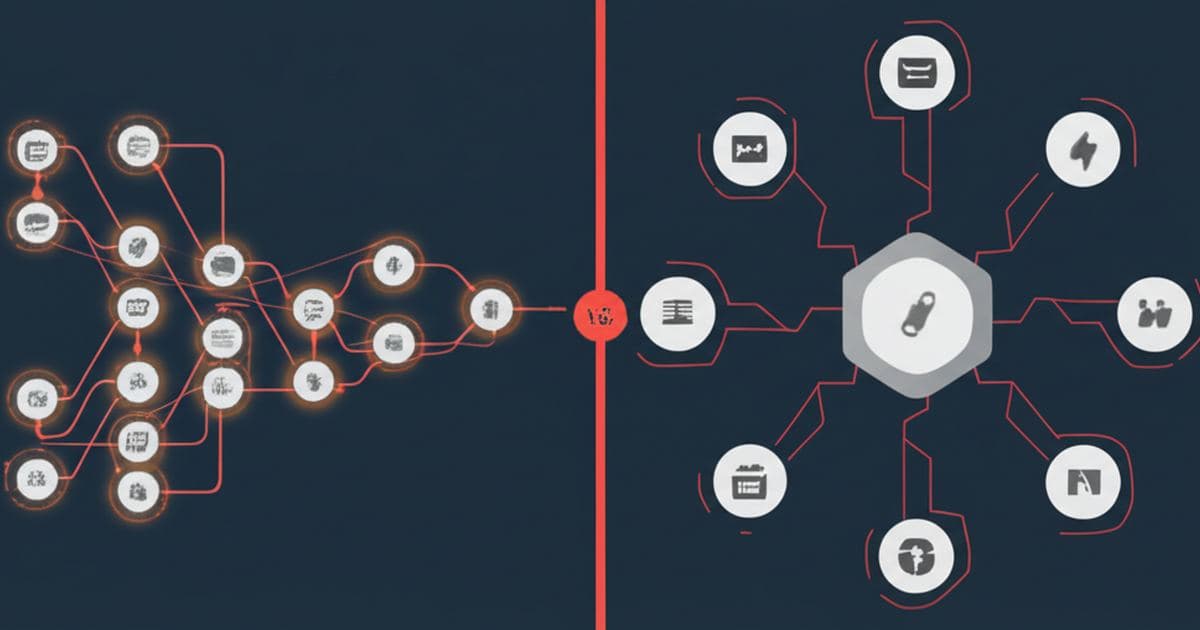
Hive is a Python framework for building goal-driven AI agents. You define what you want an agent to achieve, and the framework generates a graph of nodes and edges to get there. Think of it as an orchestration layer where the LLM itself helps design the workflow.
OpenClaw is an open-source AI agent platform. It runs a WebSocket gateway that connects to WhatsApp, Telegram, Slack, Discord, and about a dozen other messaging platforms. Behind that gateway sits an embedded agent runtime with access to tools like a browser, a shell, cron scheduling, and more. People use it for everything from personal assistants to customer-facing business automation.
Both projects are open source. Both deal with AI agents. But they approach the problem from completely different directions.
The Philosophy Behind Each
Hive takes a top-down approach. You start by writing a goal with clear success criteria and constraints. A "Builder" LLM reads that goal and generates the entire agent graph: which nodes to create, how to connect them, what tools each node needs. When something fails, the framework captures what went wrong and the Builder can evolve the graph automatically. The core idea is that agents should improve themselves over time without you manually rewiring things.
OpenClaw works bottom-up. You configure which channels to connect, which tools to enable, which skills to load, and then the agent handles incoming messages. There's no graph or goal system. Instead, the agent follows a straightforward loop: receive a message, build a prompt with context and skills, call the LLM, execute any tool calls, and send the response back through whatever channel it came from. The core idea is that your AI agent should be reachable from anywhere people already communicate, whether that's a personal Telegram chat or a company-wide Slack workspace.
Architecture at a Glance
Hive's Graph Model
Everything in Hive revolves around a directed graph. The building blocks are:
- Nodes that do the actual work. There are five types: LLMNode (calls an LLM with tools), RouterNode (decides where to go next), FunctionNode (runs deterministic Python code), EventLoopNode (multi-turn reasoning), and HitlNode (pauses for human input).
- Edges that connect nodes with conditions. An edge can fire always, on success, on failure, based on a safe expression, or even let an LLM decide at runtime which path to take.
- Goals that define success criteria and constraints. These aren't just documentation. The framework actually evaluates them during execution.
- SharedMemory that gives nodes a typed, scoped state container with per-key locking. Each node declares which keys it can read and write, so you get data isolation without extra boilerplate.
The GraphExecutor walks through this graph from an entry node to a terminal node, evaluating edges along the way. For more complex setups, the AgentRuntime can run multiple execution streams concurrently with shared state and an event bus for coordination.
OpenClaw's Gateway Model
OpenClaw is built around a single WebSocket server at ws://127.0.0.1:18789. Everything connects to this gateway: messaging channels, the CLI, the web UI, companion apps on macOS/iOS/Android, and the agent runtime itself.
The key pieces are:
- Channels that bridge messaging platforms. Each channel has its own routing rules, allowlists, and DM policies. There are 15+ built-in integrations with another 35+ available as extensions.
- Sessions that isolate conversations. Each channel, group, or DM gets its own session with independent state, model overrides, and conversation history. Sessions auto-compact when the history grows too long.
- Tools that give the agent real capabilities. The browser tool alone is over 6,000 lines of code. There's also a full PTY-based bash executor, web fetching with SSRF protection, cron scheduling, and inter-agent messaging.
- Skills that bundle reusable instructions and context. There are 40+ bundled skills for things like Slack workflows, Notion management, GitHub operations, and Spotify control.
- Nodes (the device kind, not to be confused with Hive's concept). These are companion apps on macOS, iOS, and Android that can run local actions like screen recording, camera access, or system notifications.
Feature Comparison
Here's where the differences really show up:
| Feature | Hive | OpenClaw |
|---|---|---|
| Graph-based workflows | Core feature with conditional routing | Not supported, uses a linear agent loop |
| Goal-driven development | Natural language goals generate agent graphs | Behavior defined through skills and config |
| Self-healing | Builder LLM analyzes failures and evolves the graph | Not supported |
| Multi-channel messaging | Not a messaging platform | 15+ channels including WhatsApp, Telegram, Slack, Discord, Signal, and iMessage |
| Human-in-the-loop | Built-in HitlNode with timeouts and escalation | Users interact naturally through their messaging apps |
| Checkpointing | Configurable checkpoints with session resumption | Session persistence with automatic compaction |
| Tools | 102+ tools covering files, CSV, PDF, CRM, email, web search, and more | Rich built-in tools (browser, bash, web, cron) plus 40+ skills |
| Browser automation | Playwright tool | Deep Playwright integration with device proxying and screenshots |
| Sandbox and isolation | Per-node memory scoping | Docker-based sandboxes per session |
| LLM providers | 100+ providers via LiteLLM | Anthropic and OpenAI with fallback chains |
| Cost controls | Per-team and per-agent spending limits with automatic model degradation | Auth profile rotation with cooldowns |
| Voice and canvas | Not supported | Always-on voice on macOS, iOS, and Android plus interactive canvas |
| Companion apps | Not supported | macOS menu bar app, iOS, and Android |
| Remote access | Not built in | Tailscale Serve and Funnel integration |
| Monitoring UI | Terminal dashboard with live graph visualization | Web-based Control UI built with React and Lit |
| Scheduling | Not built in | Cron tool for scheduling future agent runs |
| Plugin system | MCP-based tool registration | Full plugin system for channels, skills, and tools |
| Testing | Goal-based testing, approval tests, and debug tools | Vitest with 70% coverage threshold, E2E, and Docker suites |
Tech Stack
Hive is written in Python 3.11+ with asyncio at its core. It uses Pydantic for validation, LiteLLM for model abstraction (which gives it access to over 100 LLM providers), and Textual for its terminal UI. The tool ecosystem lives in a separate aden_tools package. There's also a Node.js/TypeScript wrapper for the CLI.
OpenClaw is TypeScript all the way down, running on Node.js 22+. It uses Zod for config validation, Playwright for browser automation, Grammy for Telegram, Baileys for WhatsApp, and Bolt for Slack. The native companion apps are built in Swift (macOS and iOS) and Kotlin (Android). It bundles with tsdown and lints with oxlint.
When to Use Hive
Hive makes sense when you're building agent workflows that need structure. If you have a multi-step business process where steps depend on each other, where failures should trigger recovery paths, and where the whole thing needs to get better over time without manual intervention, that's Hive's sweet spot.
Some concrete examples:
- A research agent that searches for information, validates findings against criteria, and produces a structured report
- A data pipeline that extracts, transforms, and loads data with conditional branching based on what it finds
- A customer support agent with explicit escalation paths and human-in-the-loop checkpoints
- Any workflow where you want the agent to self-improve based on recorded decisions and outcomes
The tradeoff is that you're writing Python, defining graphs, and thinking in terms of nodes and edges. There's a learning curve, and it's definitely aimed at developers.
When to Use OpenClaw
OpenClaw makes sense when you need an AI agent that connects to the channels people already use. Whether you're building a personal assistant, a team-facing support agent, or a customer-facing bot on WhatsApp, OpenClaw's strength is bridging the gap between your agent and the real world of messaging platforms.
Some concrete examples:
- A business support agent that handles customer questions on WhatsApp, Slack, and Telegram simultaneously
- An internal team assistant that can browse the web, run shell commands, and manage workflows from any chat channel
- A multi-agent setup where different departments or customer groups get isolated agents with their own sandboxes
- A self-hosted deployment where you keep full control over your data, accessible remotely through Tailscale
The tradeoff is that it's more of a platform than a framework. You configure it rather than code against it, and extending it means working within its plugin and skills model.
Could They Work Together?
This is the interesting question. Hive builds structured agent workflows. OpenClaw delivers agents to users across channels. In theory, you could build a complex agent graph in Hive and then expose it through OpenClaw's gateway so users can interact with it from WhatsApp or Slack.
They don't integrate out of the box, and the language difference (Python vs TypeScript) adds friction. But the architectural fit is there. Hive handles the "think and execute" layer while OpenClaw handles the "connect and deliver" layer. If either project grows toward the other's territory, or if someone builds a bridge between them, the combination could be quite powerful.
Final Thoughts
Hive and OpenClaw answer fundamentally different questions. Hive asks: "How do I build reliable autonomous agents that improve over time?" OpenClaw asks: "How do I deploy AI agents to the channels where people already work and communicate?"
If you're a developer building structured agent workflows with complex branching logic, start with Hive. If you need an AI agent that connects to real messaging platforms and serves real users or teams, start with OpenClaw. And if you're the kind of person who wants both, now you know what each one brings to the table.
Whatever brought you here, whether it was a GitHub notification or genuine curiosity, we hope this comparison helped you make a more informed decision.