Why Your AI Agent Needs an Identity Architecture (Not Just a System Prompt)

26 years building and operating hosting infrastructure. Founded Remsys, a 60-person team that provided 24/7 server management to hosting providers and data centers worldwide. Built and ran dedicated server and VPS hosting companies. Agento applies that operational experience to AI agent hosting.
Table of Contents
Most AI agent tutorials start the same way: "Write a system prompt. Tell the agent who it is. Done."
That works for demos. It breaks in production.
The moment you need to rename an agent, recover from a crash, let users edit personality, or share configurations between agents — you discover that "just a system prompt" isn't an identity architecture. It's a string.
This guide covers what actually goes wrong, why it happens, and the design principles that fix it. Whether you're building your own agent platform or choosing one, understanding identity architecture will save you months of debugging the kind of bugs that only surface after real users start relying on your agents.
The Rename Test
Here's a simple thought experiment that reveals whether your agent platform has an identity architecture or a house of cards.
Your agent is named "Jora." A user renames it to "Maria Mirabela." What happens?
In most setups, the name lives in multiple places:
- The database record
- A system prompt or personality file on disk
- An identity/config file in the agent's workspace
- The runtime configuration that gets loaded at startup
The rename API updates the database. That's usually where it stops. The agent keeps reading its on-disk files, which still say "Jora." The runtime config, generated at the last startup, still says "Jora." The personality file, which the agent may have even customized over weeks of conversation, still says "Jora."
The user changed the name. The agent doesn't know.
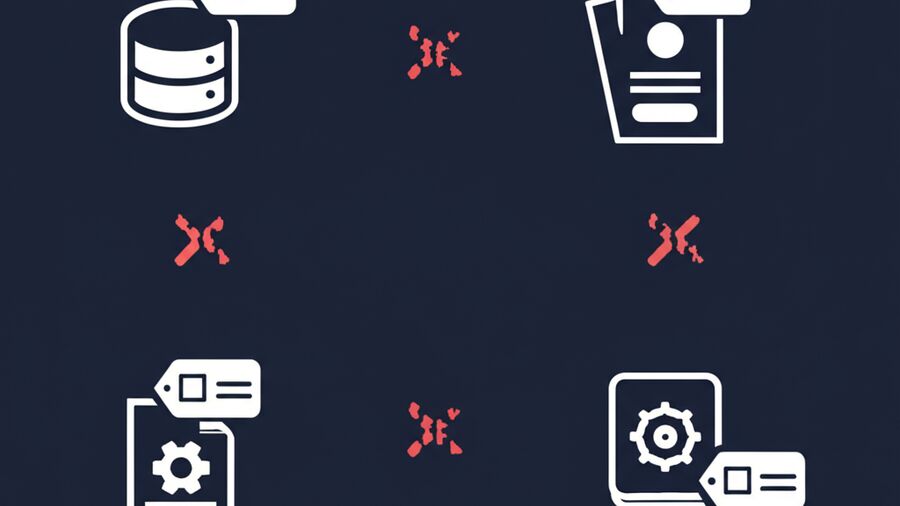
This isn't a contrived edge case. It's the first thing that happens when a real user tries to customize their agent. And it's a symptom of a deeper architectural problem: there is no single source of truth for identity.
Every piece of data that exists in more than one location without a synchronization mechanism will eventually drift. Names, roles, descriptions, personality traits — if they live in both the database and the filesystem with no coordination, they will diverge. It's not a question of if. It's when.
Two Things That Look the Same But Aren't
Most agent frameworks stuff everything about "who the agent is" into one file or one prompt. Name, role, personality, communication style, behavioral rules — all in one blob. This feels natural. It's also the root cause of almost every identity-related bug.
The problem becomes clear when you ask: who should be able to change this?
Some things about an agent should be controlled by the platform or the user, and should be immutable at runtime:
- Name — the user chose it, the user changes it, the agent doesn't get a vote
- Role — "Customer Support Agent" or "Sales Assistant" is a business decision
- Organizational context — which company, which team, what boundaries
Other things should be owned by the agent itself and allowed to evolve:
- Communication style — the agent learns that its user prefers concise responses
- Personality traits — it develops opinions, preferences, a sense of humor
- Behavioral patterns — it figures out when to be proactive vs. wait for instructions
The first category is identity. The second is personality.

When you conflate them — name and personality in the same file — you get impossible conflicts. The user renames the agent, which means rewriting the personality file, which means overwriting the agent's carefully evolved communication style. Or the agent evolves its personality file, which means it can accidentally change its own name. Neither outcome is acceptable.
The Future of Privacy Forum's research on AI systems draws a similar distinction between "personality" (human-like traits and behaviors) and "personalization" (adaptation to individual users). These are separate concerns that require separate mechanisms. Mixing them guarantees one will break the other.
The Clean Separation
The architecture that works:
| Concern | Controlled by | Mutable at runtime? | Survives crash? |
|---|---|---|---|
| Identity (name, role) | Platform / user | No — set at startup, immutable until restart | Yes — lives in database |
| Personality (style, tone, values) | Agent (evolvable) | Yes — agent can modify its own personality files | Must be backed up |
| Platform rules | Platform | No | Yes — regenerated from config |
Identity is injected by the platform into a protected, immutable configuration layer. Personality lives in a separate file that the agent owns and can evolve. The two never share a file, never compete for control, never create ambiguity about who's allowed to change what.
The Crash Recovery Problem
Here's another test: your agent has been running for three weeks. During that time, it's refined its personality — learned communication preferences, developed opinions, figured out what tone works with its user. Then the server dies.
Where did all that personality evolution go?
If personality lives only on the container's filesystem, it's gone. Weeks of accumulated self-knowledge, erased. The agent restarts with the factory-default personality and the user has to retrain it from scratch.
This is surprisingly common. Most agent frameworks treat the filesystem as the source of truth for personality files. Containers are ephemeral by design. The filesystem is the worst possible place to store something valuable.
The correct pattern: personality must have a durable backing store, with the running copy as a working cache.
Database (source of truth, survives everything)
    │
    ├── Written at creation time
    ├── Updated periodically from disk (sync)
    └── Restored to disk on recovery
         │
         ▼
Filesystem (working copy, fast access)
    │
    ├── Read by agent at session start
    ├── Modified by agent during operation
    └── Lost on server death (acceptable — DB has backup)
The database always has a copy. When a container starts, the orchestrator checks: does the workspace have a personality file? If not (new container, crash recovery, migration), restore it from the database. If so, use what's on disk — it may be more recent than the DB copy.
Periodic synchronization keeps the database copy fresh. Not real-time (too expensive), not never (too risky). A reasonable interval — minutes, not seconds — that catches most evolution without hammering the database.
When Two Writers Edit the Same File
Once personality is both on disk (agent evolves it) and in a database (user edits it via UI), you have a classic distributed systems problem: two writers, one resource.
The agent changes its personality file at 2:00 PM. The user edits personality via the dashboard at 2:05 PM, working from the 1:30 PM sync. Both have made legitimate changes. Now what?
Three Approaches
Last-write-wins: Whichever save happens later silently overwrites the other. Simple to implement, guaranteed data loss. The agent's 2:00 PM edits vanish without anyone knowing. This is what most systems do by default, and it's why users report "my agent's personality keeps resetting."
LLM auto-merge: Send both versions to a language model and ask it to combine them. Sounds elegant. In practice, it's unpredictable. The LLM might drop important nuances, invent new content, or subtly shift the personality in ways nobody intended. Users end up asking "why did my agent start talking differently?" with no clear answer. Auto-merging is the kind of feature that demos well and causes support tickets in production.
Deterministic conflict detection: Compare hashes. If only one side changed since the last sync, that side wins — no ambiguity. If both sides changed, flag it as a conflict and show the user both versions. Let the human decide. No data loss, no surprises, no "why did my prompt change?" incidents.
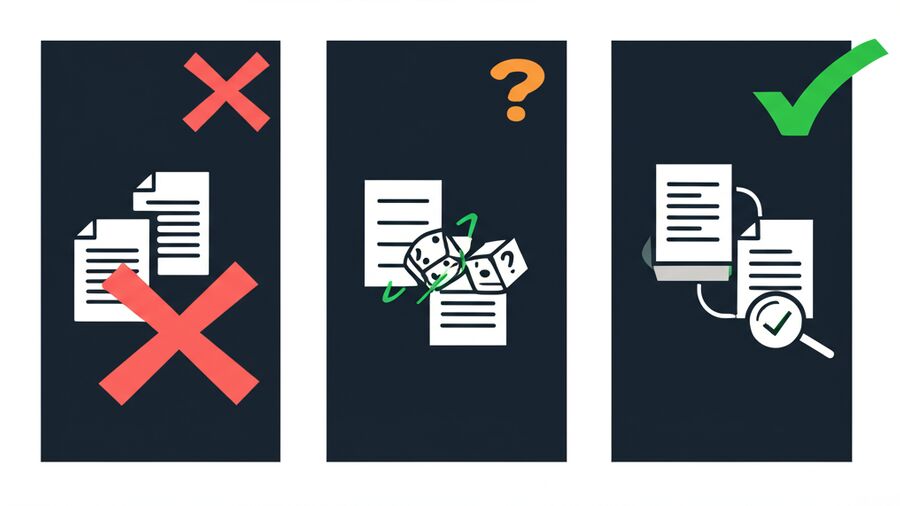
The third approach is the only one that maintains user trust. In a system where the agent's personality directly affects how it communicates with users and customers, predictability beats cleverness every time.
How Hash-Based Detection Works
Every time a personality file is synced or saved, store a hash (SHA-256) of its content along with a timestamp and source identifier (was this change from the agent editing on disk, or the user editing via UI?).
When a new version arrives — either from a periodic disk sync or a user save — compare:
- Only the agent changed (disk hash differs, DB hash matches last sync) → agent's version wins, update DB
- Only the user changed (DB hash differs, disk hash matches last sync) → user's version wins, push to disk
- Both changed → conflict. Store both versions. Show the user a diff. Let them pick one or manually merge.
Case 3 should be rare — it requires the agent and user to edit personality within the same sync window. But when it happens, the user sees exactly what happened and makes an informed choice.
The "Apply Now" Trap
A subtle but critical implementation detail: most agent frameworks cache their configuration at startup. The system prompt, personality files, identity data — all loaded into memory when the process starts. They don't re-read files during a running session.
This means writing a new file to the container's filesystem has no effect on the running agent. The agent will keep using whatever it loaded at startup until the process restarts.
This catches almost every team that builds a "live edit" feature. They write the file, confirm it was written successfully, tell the user "personality updated" — and nothing changes. The agent keeps behaving exactly as before.
The correct pattern: "Apply" means "restart." When a user edits personality and clicks "Save & Apply":
- Save to the database (durable store)
- Write to the container's filesystem (for next session within this container's lifetime)
- Restart the container (so the agent actually loads the new files)
If the agent is stopped, skip step 3 — changes will take effect on the next start.
This requires clear UI communication: "Applying personality changes will restart your agent. Active conversations will start a new session." Users need to understand the cost so they can choose when to apply.
For less disruptive updates — "I want to change the personality but not interrupt the current conversation" — set a flag in the database indicating changes are pending. Show it in the UI. Let the user apply when they're ready, or let it happen naturally at the next restart.
Restarts Are Cheap, Data Loss Isn't
The "Apply = Restart" pattern seems heavy-handed until you consider the alternative. If you try to hot-reload personality without restarting:
- You need to inject new system prompt content into a running LLM session (not universally supported)
- The agent may have cached portions of its personality in its own working memory
- Partial updates create inconsistent states — half old personality, half new
- Debugging becomes a nightmare: "which version of the personality was active when this conversation happened?"
Restarts are a clean boundary. Everything before the restart used the old personality. Everything after uses the new one. Clean, debuggable, predictable.
Modern containers restart in seconds. The cost of a restart is trivially small. The cost of a subtle personality inconsistency — an agent that sometimes uses the old tone and sometimes the new one — is customer confusion and lost trust.
The Portability Insight
Here's something that falls out naturally from clean identity/personality separation: personality becomes portable.
When the agent's name is embedded in its personality file — "I am Maria, a friendly customer support agent" — that personality can't be reused for another agent named Alex. It's tightly coupled to one specific identity.
When personality is name-free — it describes tone, style, values, and communication patterns without referencing a specific name — it works for any agent. A "warm, professional support" personality works whether the agent is named Maria, Alex, or 客服小助手.
This portability has cascading benefits:
- Sharing: Users can share personality configurations without manual editing
- Templates: A library of proven personalities that work out of the box
- Recovery: Restoring personality from backup doesn't require name-matching
- Testing: The same personality can be tested across different agent identities
None of this is possible when identity and personality are tangled together in the same file. Separation isn't just about correctness — it's a prerequisite for an entire class of features that users will eventually want.
Design Principles for Agent Identity
After building and operating agent infrastructure that handles renames, crashes, user edits, and agent self-modification, these principles have held up:
1. Separate Identity from Personality
Identity (name, role, organizational context) is platform-controlled and immutable at runtime. Personality (tone, style, values) is agent-owned and evolvable. They never share a file. They never compete for control.
2. One Source of Truth Per Concern
The agent's name lives in exactly one authoritative place. Personality lives in exactly one authoritative place. Every other copy is derived and can be regenerated. If you find the same data in two places with no sync mechanism, you've found a future bug.
3. Durability Over Convenience
If the agent can evolve it, back it up. Filesystem-only personality is a time bomb. The database is the durable store; the filesystem is a working cache. When they disagree, the answer depends on what changed and when — not on which is "more authoritative" by default.
4. Deterministic Conflict Resolution
When both user and agent change personality, detect it with hashes and timestamps. Show both versions. Let the human decide. Never auto-merge personality changes — users need to trust that their agent's behavior won't change without their knowledge.
5. Restarts Are the Apply Mechanism
Running agents cache their configuration. File changes don't take effect until restart. Design your entire update flow around this reality instead of fighting it. Make restarts fast, communicate them clearly, and give users control over timing.
6. Portability Requires Separation
If personality contains the agent's name, you can't share it. If it contains organization-specific context, you can't template it. Keep personality focused on how the agent communicates, not who it is. Identity handles the who.
Putting It Together
The architecture that emerges from these principles has three clean layers:
Platform layer — Injects identity (name, role, description) into a protected, immutable configuration. Regenerated on every restart from the database. The agent cannot modify it. Users change it through the platform UI, and it takes effect on next restart.
Agent layer — Owns personality files that describe communication style, values, behavioral patterns. The agent reads these at session start and can modify them over time. Changes are periodically synced to the database for durability.
User layer — Can view and edit personality through a dashboard. Edits are saved to the database and applied on restart. If both the user and agent have edited since the last sync, a conflict is detected and the user resolves it.
Each layer has clear ownership, clear persistence, and clear boundaries. The rename test passes. Crash recovery works. Users can edit without overwriting agent evolution. Agents can evolve without hijacking identity.
This isn't theoretical. It's the architecture we run at Agento for every agent on the platform. Every agent gets crash-recoverable personality, immutable identity injection, conflict detection, and a personality editor — because we learned the hard way that "just a system prompt" doesn't survive contact with real users.
If you're building agent infrastructure, start with the rename test. If it fails, you know where to look.